
About
Did you know that Archipelago is an SPC–a social purpose corporation? We did this so that we were not beholden to a for-profit model, allowing us to pursue both social and financial goals. For BIPOC communities, lack of representation through stories and history is a form of oppression. In our food system, this creates a frustrating reality that BIPOC communities must fight for a seat at a table – when in fact they built that table.
-
We are excited to share that we’ve been building out the research and social purpose arm of Archipelago. We understand that Archipelago’s work to bring stories of the FilAM experience to life through food is much greater than us alone. From opening day until 2022, we told Maria Orosa’s story every single night. When our friend Carmel of @kalsadacoffee found her in the archives at FAHNS almost a decade ago, few knew her story. Now, her story has appeared everywhere and we couldn’t be prouder.
We realize though, that there are MORE stories that must be found or further uncovered. Sadly, our history here in the U.S. can’t simply be googled. We’ve been searching through archives, gathering oral histories, connecting with farms, as well as working with FANHS, FilAm Educators and local schools to share. We hope to do more - because increasing our understanding of food is just as important as food itself.
-
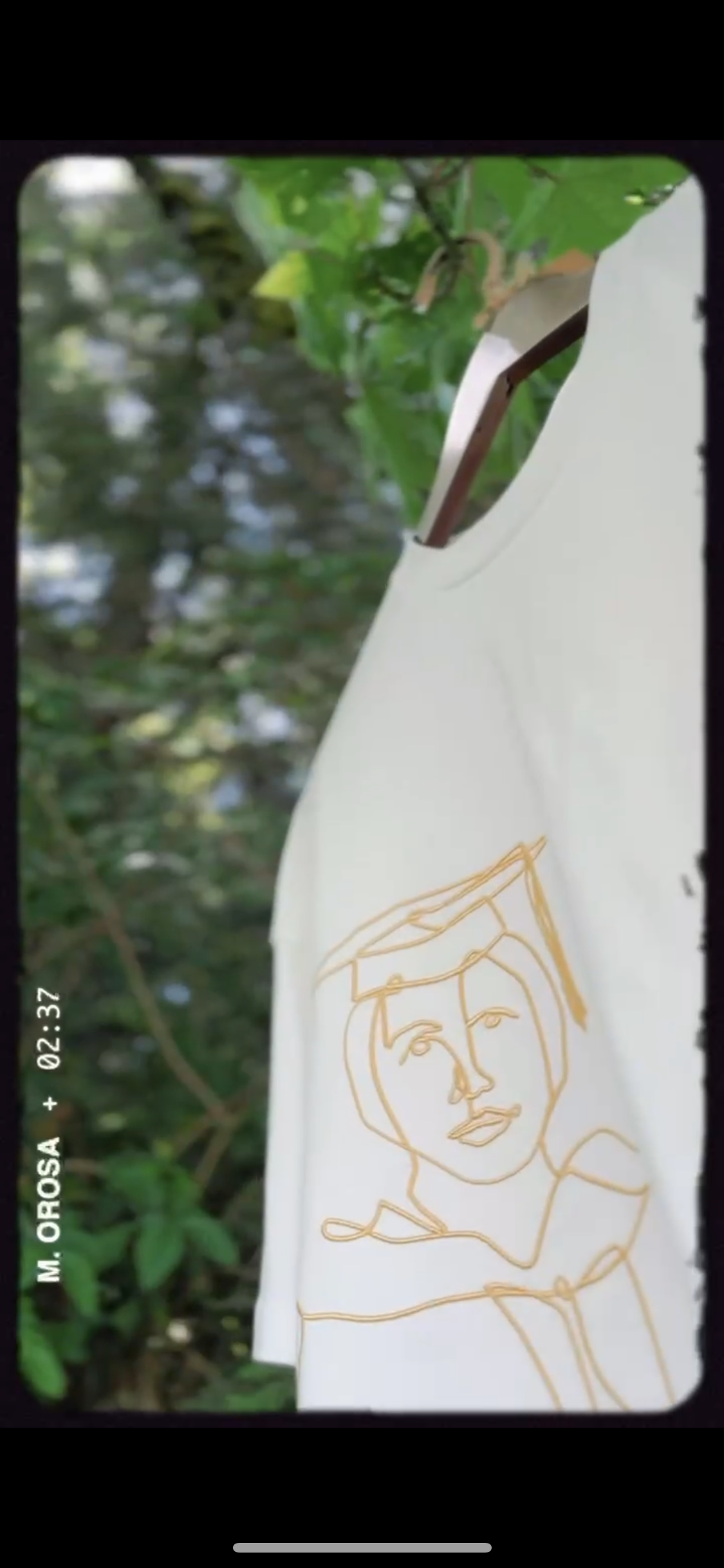
We are relaunching our Bayani Kollection to raise money for this work. Each drop will focus on a Bayani from our previous experiences, using their contributions as powers for our community. We start with the woman who inspired our concept and empowered us to see ourselves both in Seattle and globally – Maria Orosa. Her superpower for our kollection, is education, just in time for graduation. We will be auctioning/selling one of a kind limited shirts, each embroidered with the hero and number, making every single one unique. 001 of each size will be auctioned giving the owner special access. We will also be selling different tiered shirts at a fixed price.
With your support Archipelago will continue to build out the future of cultural food systems, making sure community and social impact is always at the center.
-
This program has already supported:
Filipino/a/x curriculum in Seattle Public Schools in partnership with Filipino American Educators of Washington
FilAm and BIPOC archival and documentation work through UW Special Collection Archives and in partnership with Filipino American National Historical Society (FANHS)
Strengthening relationships between FilAm organizations and our city’s institutions—reclaiming and naming histories that have not been shared, allowing them to live on in community
Community events such as Malaya’s Golden Years photo exhibit, Justice for the United 6 community forum, Field to Table SPS Curriculum Fundraiser and Awareness event, Millcreek Middle School’s Future Fest, and the Ma'am Tere Seattle screening
Classroom visits
We hope to do so much more!

Shop
We are selling one of a kind limited shirts, each embroidered with original artwork of Maria Orosa (M.O.) and production number, making every single one unique. There are two cuts, boxy and long. The boxy cut is traditionally sized for women while the long is traditionally sized for men, but they are both oversized Ts that anyone can wear. We are selling them in 3 tiers.
Available for both shipping and to be picked up. All shipped shirts will arrive in a mini balikbayan box!
TIER 1, Shirts 001
SOLD OUT
Auction | Own a limited edition embroidered Maria Orosa Bayani Shirt, with access to:
a private farmers’ market visit with Chef Aaron
a prep day with the Archipelago team
an entire year of first pick for reservation dates and times
TIER 2, Shirts 002-005
SOLD OUT
$100 | Own a limited edition embroidered Maria Orosa Bayani Shirt, with access to:
one-time access to pre public booking for a reservation
a surprise take home gift at the end of your meal
menu signed by team and Chef Aaron
All special access and gifts are non transferable and can only be used and redeemed by the original owner of the shirt which will be designated at checkout. By purchasing you and the shirt owner agree to all Terms and Conditions.
TIER 3, Shirts 006-014
$67 | Own a limited edition embroidered Maria Orosa Bayani Shirt with access to
Being automatically entered into a drawing. The winner will get pre public booking with a surprise gift at the end of the dinner.
All special access and gifts are non transferable and can only be used and redeemed by the original owner of the shirt which will be designated at checkout. By purchasing you and the shirt owner agree to all Terms and Conditions.

Tier 3: M.0. 006-014, Boxy/Women’s T
$45.00
OVERSIZED BOXY T
Fit: Short, boxy, soft, oversized T-shirt. Dropped shoulders.
Material: 100% Cotton Jersey. Sustainably made from recycled cotton.
Care: Machine wash cold, hang dry.
Own a limited edition embroidered Maria Orosa Bayani Shirt featuring original artwork from local FilAm artist.
Shirt numbers cannot be chosen, you will receive yours in the order that it was purchased.
All special access and gifts are non transferable and can only be used and redeemed by the original owner of the shirt which will be designated at checkout. By purchasing you agree to all Terms and Conditions.

Tier 3: M.0. 006-014, Long/Men’s
$45.00
LONG T
Fit: Long, comfy, regular-fit T-shirt with a curved hem.
Material: 100% Cotton Jersey.
Care: Machine wash cold, hang dry.
Own a limited edition embroidered Maria Orosa Bayani Shirt featuring original artwork from local FilAm artist.
Shirt numbers cannot be chosen, you will receive yours in the order that it was purchased. Tier 3 shirts are NOT mailed in a Balikbayan Box.
All special access and gifts are non transferable and can only be used and redeemed by the original owner of the shirt which will be designated at checkout. By purchasing you agree to all Terms and Conditions.
COURSE 2
SALVADOR DEL FIERRO
Unlike a tropical environment, the PNW has distinct seasons and no coconuts. The iconic dish of 'pinakbet' comprises vegetables cooked in bagoong, and ‘ginataan’ describes a dish stewed in coconut milk. For this course we feature a Seattle icon, Salvador Del Fierro. Del Fierro, like Victorio and the many other individuals we have highlighted over the years in our menu was an Alaskero. This common thread shared by many only in seasonal profession.

(Salvador Del Fierro toasting to Ramon Magsaysay in 1953, Filipino Forum, 1953)
Del Fierro's name lives on in the Filipino Community of Seattle, with records of him signing off on the creation of Dr. Jose Rizal Park, and an illustrious legacy serving as President of the Filipino Association in Ketchikan, as well as the Filipino Community of Seattle. Del Fierro's political acumen was in part his skill, and through the fates, when his nephew, Ramon Magsaysay, became a contender in the race for President of the Philippines - and won by a landslide.
In Seattle, Del Fierro organized the "Magsaysay for President" club, helping to fund Magsaysay's success in the Philippines as well as strengthen diplomacy between the US and the Philippines following WWII. Del Fierro's organizational talent served to catalyze the final fundraising push to establish the physical Filipino Community Center which stands today on MLK Way South. Today, the center is indispensable in the fabric of FilAm Seattle offering a variety of cultural enrichment programming, language classes, resources like free meals for seniors, and housing.
Del Fierro's legacy of political organizing is also evidenced in his work to desegregate public schools in Ketchikan Alaska. Incredibly important to note are the Native community organizations that fought alongside him for a similar cause. Though the record does not mention their collaboration, Filipinos and Alaska Natives were segregated and forced into living in close proximity, in what is now known as the Stedman-Thomas Historic District. As we continue to research in archives across Washington, we learn more and find more records about Filipino life in Seattle. This information too is critical as it informs how Filipinos can collectively determine how our history is remembered. Scholarship speaks to the intricate ways that Alaska Native interests as manifested through the Alaska Native Brotherhood were different in aim and scope from those advanced by Filipino-led unions. To truly understand these nuances is to account for our responsibility as storytellers.
Meryenda: WATERLINES
Foundation: OUR RESEARCH PROCESS
Course 2: SALVADOR DEL FIERRO
Course 3: VICTORIO VELASCO
Course 4: BOB SANTOS
Course 5: BURN THE MORTGAGE
Course 6: KING STREET BARRIO
Banuhay: 1909 FILIPINO COFFEE COMPANIES
Interlude: BOB’S QUALITY MEATS
Course 7: 1909 FILIPINO COFFEE COMPANIES
Course 8: THE HEART OF BICOL
Course 9: DOROTHY AND FRED CORDOVA
Course 10: BAYANI BOX
Share: FAMILY STORIES
Dialogue: THOUGHTS OR QUESTIONS?
